During the last years of her life, my mother lived in a quiet retirement community on St. Radigund’s Street in Canterbury. She had been a high school history teacher who specialised in the Tudor era but I am not sure even she was aware of the fact that, six centuries ago, her street had been the site of an abortive uprising that would eventually lead to one of the most celebrated dynastic struggles in English history.
It all started in the last week of January, 1450, when several hundred men from villages in eastern Kent staged an uprising in protest at economic hardship, local government oppression and corruption, and the debilitating war with France.
They were led by Thomas Cheyne, known as “the Hermit Bluebeard,” who marshalled his forces in the village of Eastry, south of Sandwich. Here they drew up a list of “traitors” in the government that they wished to see beheaded, chief among them the Duke of Suffolk, William de la Pole, who was widely despised as the power behind the throne in England.
It is thought they initially tried to capture Dover Castle but when that failed they turned their attention to sacking local religious houses. Chenye was a Lollard, or at least sympathetic to that anti-clerical sect founded by John Wycliffe, and doubtless keen to get some measure of payback from the bishops.
On 31 January, they reached Canterbury, the first city on the road to London, and made their way to St. Radigund’s abbey hospice (the townhouse for the abbot, and a waystation for pilgrims) on the northern edge of the city wall.
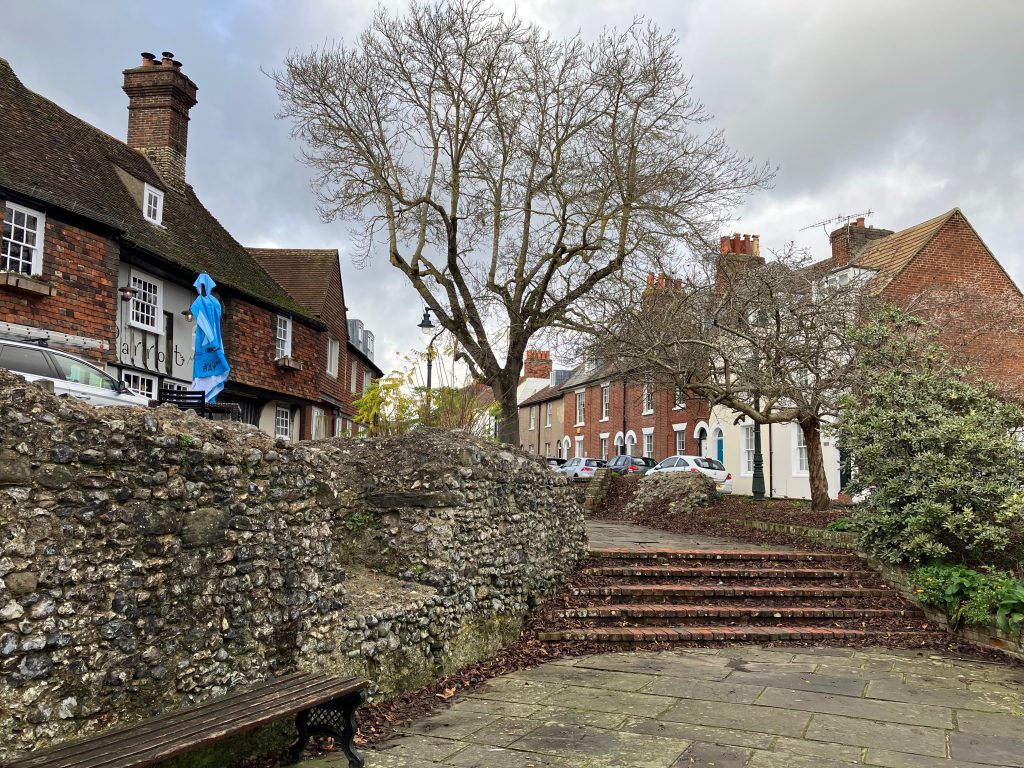
The remains of the city wall on St. Radigund’s Street, Canterbury
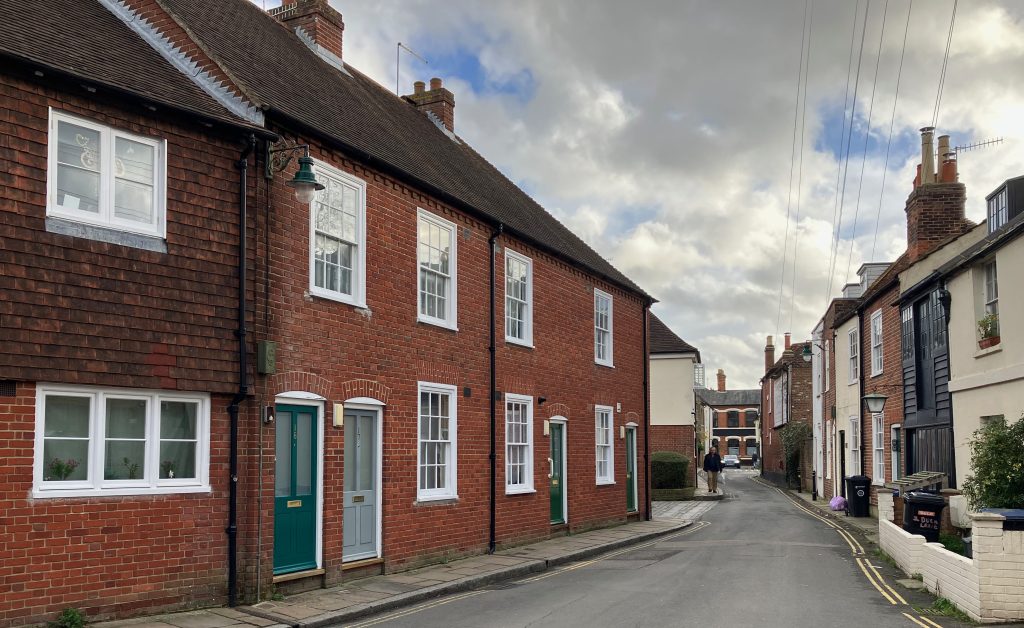
Site of the former abbey hospice on the adjacent Duck Lane
St. Radigund’s abbey itself was located in the hills above Dover and would have been a familiar (and hated) landmark for many of the villagers from nearby Temple Ewell and River who made up a large section of the uprising.
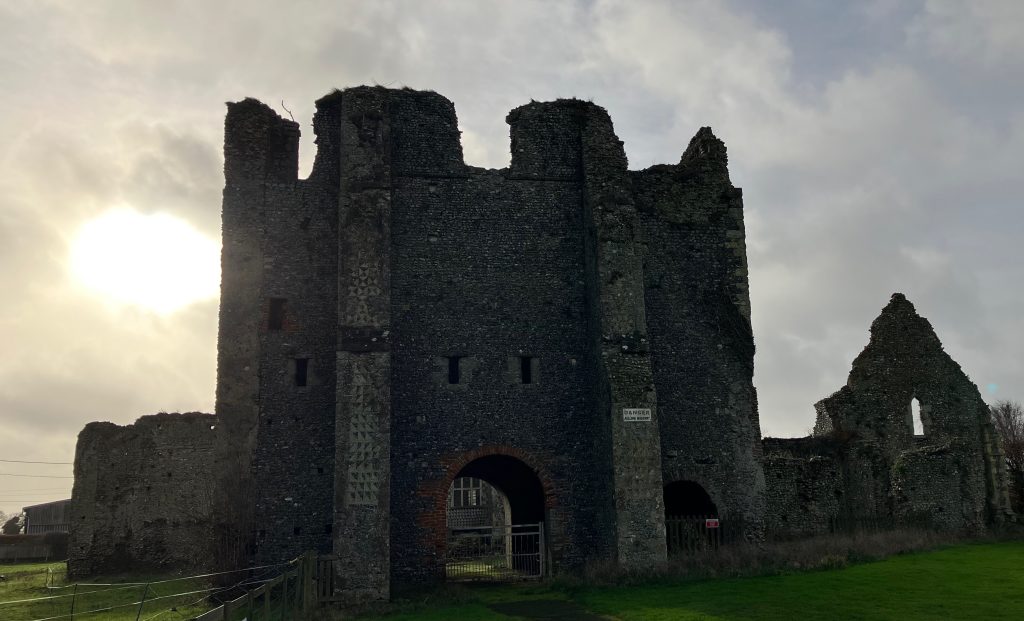
The ruins of St. Radigund’s Abbey, set in a suitably austere landscape for the famously ascetic saint
During the assault on the hospice, Cheyne was captured by the citizenry of Canterbury and swiftly brought to trial in Westminster. Inevitably, he was found guilty of treason and taken to Tyburn where he was hanged, drawn and quartered. His head was placed on a spike on London Bridge and his quartered body distributed as warning to people in London, Norwich and two of the Cinque ports.
That might have been the end of that but the people of southern England were just getting started. Earlier that month, a mob in Portsmouth had murdered the bishop of Chichester Adam Moleyns, and, concurrent with Cheyne’s uprising, a yeoman from Westminster named Nicholas Jakes was found guilty of plotting the murder the bishop of Salisbury and the abbot of Gloucester, among others.
The execution of Cheyne and other traitors was supposed to stifle dissent but it wasn’t long before there were more anti-government stirrings. Then, in the summer of 1450, there was a full-fledged uprising, known as Jack Cade’s rebellion, which would become the most important popular movement in England since the great peasants’ revolt of 1381.
The trigger for this uprising was the murder on 2 May of William de la Pole off the coast of Dover. The Duke had finally been sent into exile by the King Henry VI, as a gesture of appeasement to his critics, but Suffolk’s vessel was intercepted on its way to France by the Nicholas of the Tower. The ship’s captain, almost certainly aligned with Suffolk’s enemies, staged a mock trial and executed his prisoner.
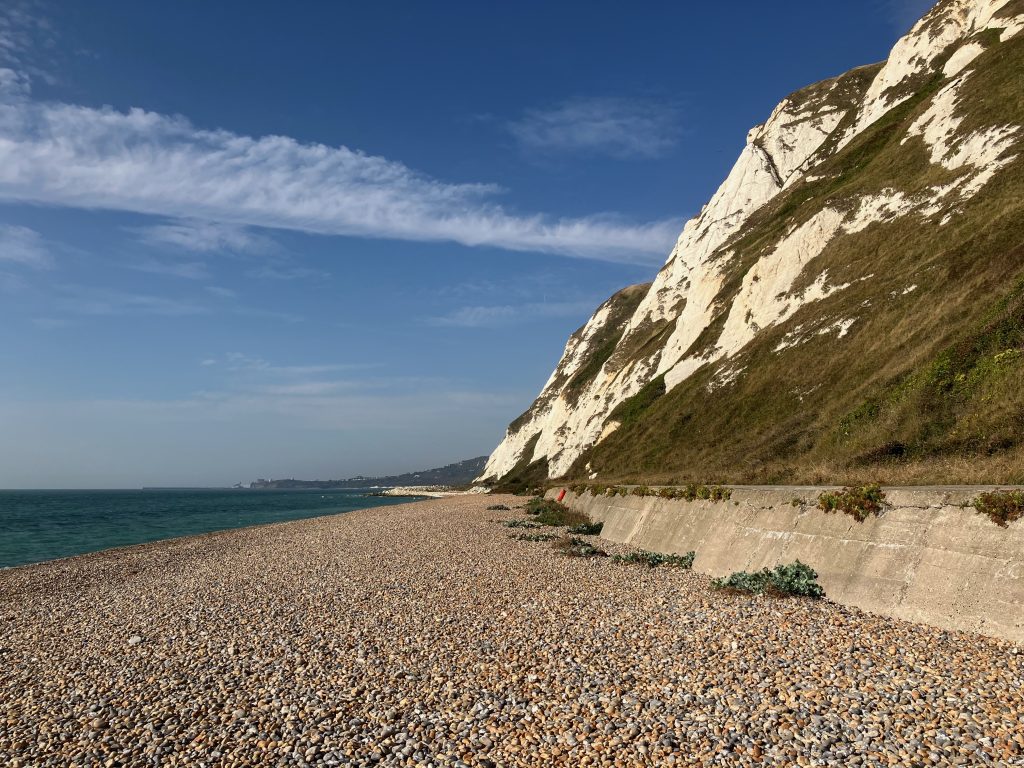
The beach below Shakespeare Cliff, near Dover
After Suffolk’s headless body washed up on the shores of Dover, word quickly spread that the king would take revenge by turning Kent into a wasteland. Within a month, an army of several thousand men, headed by the charismatic Jack Cade, was on the march to London for a showdown with the authorities.
They arrived on the outskirts of London on 11 June and, following the precedent of the 1381 uprising, which also originated in Kent, made their camp on Blackheath overlooking the city. They were met by a high-ranking delegation from the king, which accepted a petition from Cade with an extensive list of demands for reform, all couched in language that professed loyalty to the monarch.
The response of the king was, on 18 June, to attack the rebels on the heath but they had gotten wind of his plan and dispersed. Henry then decided it would be prudent to leave London for a while.
The rebels reassembled south of the river and, and with reinforcements arriving from Essex, they managed to besiege London at the end of June. They entered the city on 1 July and set about killing their perceived enemies and looting property before the Londoners managed to push them out during a pitched battle on London Bridge on the evening of 5 July.
Negotiations led by the Archbishop of Canterbury then ensued and Cade and his followers were offered a pardon if they dispersed and returned to their homes. They reluctantly agreed, probably knowing full well the pardon was not worth the paper it was inscribed upon.
Indeed, the rebels were pursued as they dispersed and Cade himself was eventually captured on 12 July in a battle in the High Weald near Heathfield, Sussex. He died of his injuries before he could be brought back to London for trial.
But, once again, that was not the end of the rebellion. For the next few years, there were intermittent risings across of the southeast of England, many led by veterans of Cade’s army and some by men claiming to be Cade himself. Their demands for fairer government, and their tacit support for the king’s rival, Richard Duke of York, remained unchanged but Henry refused to budge. As a result, in 1455, England was plunged into a three-decade dynastic conflict between the houses of York and Lancaster, known today as the War of the Roses.
Back at St. Radigund’s Street, there is a small garden with a noticeboard detailing the historical development of the area. It notes the location of abbot’s hospice in medieval times but there is sadly no mention of the Hermit Bluebeard and his uprising there.
Recommended reading
I.M.W. Harvey, Jack Cade’s Rebellion of 1450, Clarendon Press, Oxford, 1991.