During the Covid pandemic, I naïvely hoped that the worldwide restrictions on travel, combined with the ability to work remotely, might encourage people to reassess their need to move around the world with such frequency.
I was living in Hong Kong at the time, a regional and international transport hub with one of the busiest airports in the world. In the past, we had taken full advantage of our location, with regular trips to southeast Asia, mainland China and Japan, and occasionally further afield. Our apartment was a 15-minute train ride from the highly efficient Chek Lap Kok Airport and we could often get back home just 45 minutes after landing. Air travel then was almost as simple as getting on the bus.
But all that changed in early 2020. We were never formally locked down in our home but unless we were prepared to endure weeks of constant testing and quarantine, we were basically stuck inside this densely-packed city for the next two years.
There were times when I felt the walls closing in but with no realistic prospect of escape, I used the time getting to know the city, and, in particular, my small island home of Tsing Yi better. Since moving back to England four years ago, I have followed the same path and focused on the nature and history of the land around me, leaving the country just once to visit friends and family in Hong Kong.
Meanwhile, everyone here else seems desperate to leave, even if that is just for a week or two. The summer holidays have been a British institution for nearly a century now, although the wealthier sections of society have been enjoying vacations for much longer than that.
My home town of Folkestone, on the southeast coast of England, was one of the most fashionable resorts for royalty, aristocrats, and wealthy Londoners in the late Victorian and Edwardian era. Direct railway links with London made it an easy get away, and grand hotels overlooking the sea offered all the luxury discerning guests could demand.
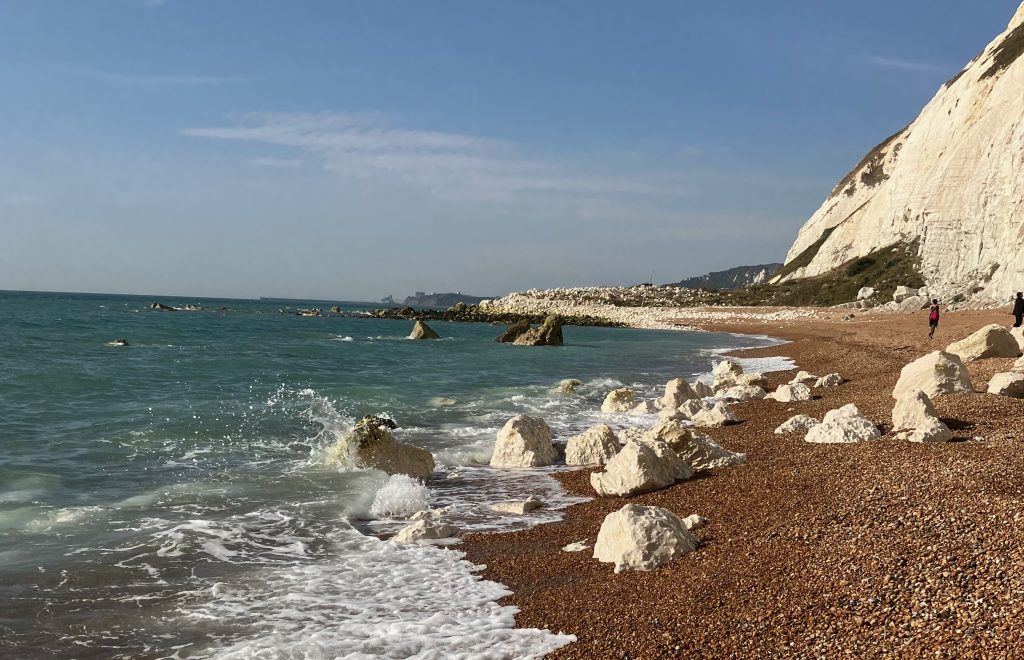
The White Cliffs of Dover looking towards Folkestone
The vacationing demographic expanded in the interwar years to include the growing middle-class, while options for poor Londoners were still limited to a few weeks hard labour in the Kent hop fields.
In the post-war years, however, the greater bargaining power of trade unions led to employers offering staff a few weeks paid annual leave, and the introduction of all-inclusive package holidays made overseas travel a possibility for the majority of families. Cheaper air travel in the 1960s opened up southern Europe to mass tourism, although English seaside towns like Margate continued to attract visitors almost up to the end of the century.
With the introduction of the Working Time Regulations in 1998, just about every employee in the UK had a legally-mandated four weeks of paid annual leave. The question was then, what would they do with it? By then, the travel industry was so well-established that it was almost obligatory to pack up and head out. And today, if you believe the advertising, a holiday, any time of the year, is just a click away.
Of course, it is never that easy. There are travel delays, queues at the airport, enhanced border checks, accommodation that doesn’t match up to that advertised, illnesses, unruly and bored children to contend with. The British news media spends almost as much time delighting in “holiday hell” as the travel industry does in advertising the delights of a summer getaway.
So, do the pros outweigh the cons? Having a compete break from your daily routine can be beneficial but with social media and the intrusive demands of employers, is it still possible to have a complete break? Seeing new places, getting to know different people and cultures, is always stimulating but how much can you really gain from a few weeks at a tourist resort? A holiday can give parents a hiatus from dealing with restless children at home but if children had more freedom to explore the world where they live, would it be necessary to take them to a new destination?
Of course, if you work in a dead-end job and live in a crappy little apartment, surely any break is better than none. But, then again, why follow the herd and submit to what the travel industry decides is a holiday? Convenience, peer pressure, and a lack of obvious alternatives, all come into play here. And the concept of a holiday is so ingrained now that it is difficult to imagine doing anything else.
Despite the much publicised “cost of living crisis” in the UK, the vast majority of British people refuse to give up their holiday privileges, spending between £3,000 and £4,000 per person per year on average on multiple trips. And there is no sign that trend will change anytime soon.
After travelling so much in the past, I am the last person to suggest that people should not go on vacation. My only hope is that more people can think outside of the travel box and begin to appreciate more of the world immediately around them.
* The opening lines from Summer Holiday by Cliff Richard and The Shadows, 1963.