Buried deep in the University of Kent’s Templeman Library are two volumes from the London Historical Society Journal, published in 1910, entitled Despatches from Paris, 1784-1790, which chronical the correspondence of John Sackville, Third Duke of Dorset, the British ambassador to France at the time.
They provide a unique insight into the early stages of the French Revolution as it unfolded, and into the mind of the Duke. A member of one of the richest and most influential families in England, Sackville was a colourful character to say the least, and major patron of the game of cricket in the late 18th century. He even attempted to introduce the sport to France before he was overtaken by political events.
Admittedly, these are rather obscure publications, but I was the first person in the library to ever look at them. It was not simply that no one else had taken them off the shelf, the library staff themselves had never noticed that the top edge of the pages were still sealed together – as was the case with most books published in the early 20th century.
Despatches from Paris are far from the only untouched publications in the library. In the history section, in particular, there are hundreds of dusty old volumes that have not been removed from the shelves for decades. The same is true for most of the traditional academic disciplines that have accumulated texts over the 60 years of the library’s existence.
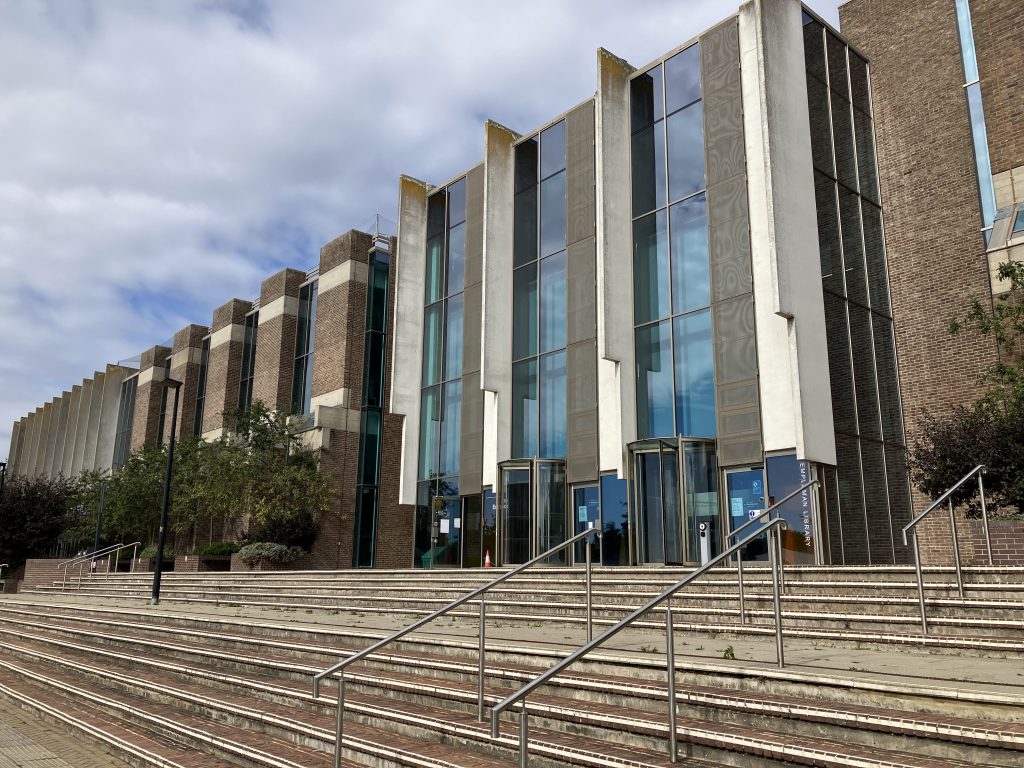
The Templeman Library, University of Kent
The problem is not simply that these books are out of date or no longer relevant, although many are, a far more important issue is the fact that most students today do not read physical books. Instead, they access reading material from the library’s every expanding collection of e-books and e-journals.
The library has a well-established digital first policy for acquisitions, especially for core reading material, a policy that guarantees students can access the required reading without having to fight over a limited supply of books on the shelf or spend hundreds of pounds to purchase them outright.
In theory, students do not ever have to set foot in the library. They can access everything remotely from their dorm room. However, you can still find students there, just not with books open on their desk.
Libraries are now more like communal study areas where students can bring their own laptop or use the terminals already in place. The Templeman library has a coffee shop on the ground floor, and a lot of shelf space has already been given over to comfortable reading areas and conference rooms.
Given the irresistible shift to digital publications, libraries will soon have to decide what to do with all the old books gathering dust on the shelves. The Templeman Library has a Special Collections and Archives section which will likely be the focus for valuable print material that needs to be preserved. Other older material will likely be disposed of once it has been securely digitised, leaving perhaps one or two hard copies for reference.
As the main collection of books diminishes, questions will have to be asked about the viability of maintaining existing library buildings, particularly given the financial crisis enveloping higher education institutes across the United Kingdom.
The Templeman Library is valuable real estate, located right at the heart of the university, and covering and area of 18,750 square meters. It currently has 12 miles of book shelves that will inevitably become surplus to requirement before too long. There is ample room on the sprawling campus on the hills above Canterbury for a smaller, specialized library. Alternatively, there are many abandoned buildings in Canterbury itself that could be repurposed, opening the way for the redevelopment of the original building on campus.
Who knows, in 10 or 20 years’ time, we might see the opening of the brand new Templeman Hotel and Conference Centre on the site of the old library.